
Wholestory: tell your whole story.
I researched the life-story app market, found the lane nobody owns, and built a free, voice-first app where people tell their life story one memory at a time and hear each other's. Around it I built a Klaviyo lifecycle program, ad tracking and a founding-tellers launch.
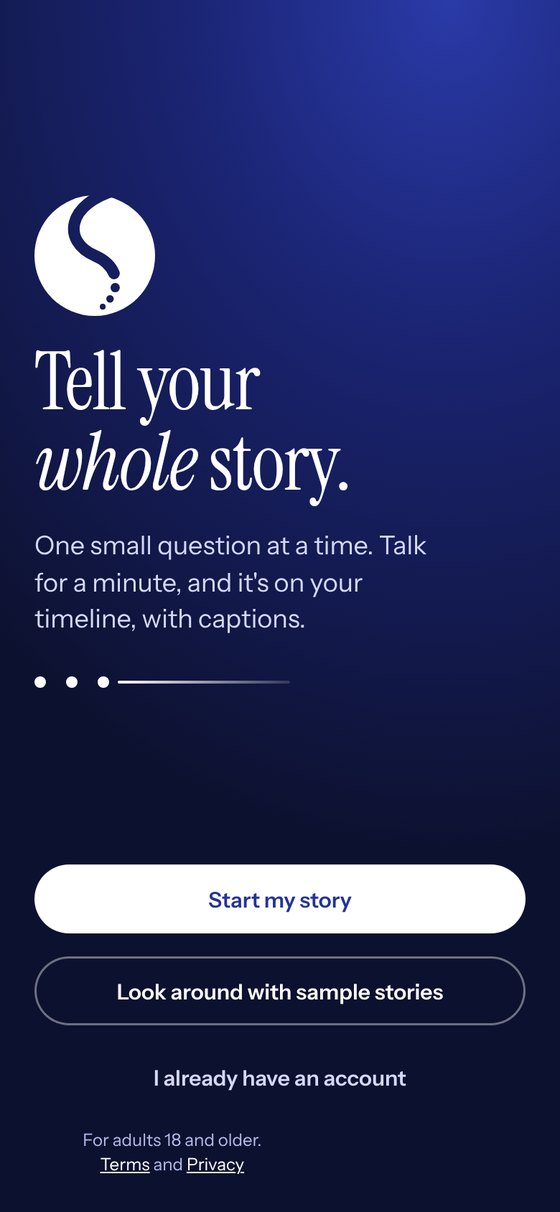
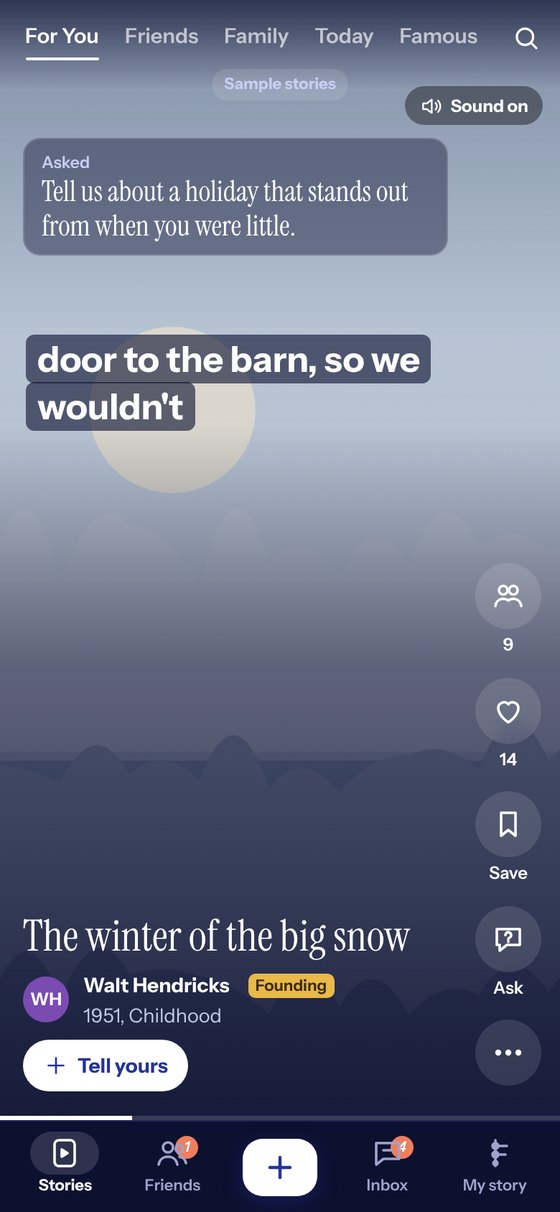
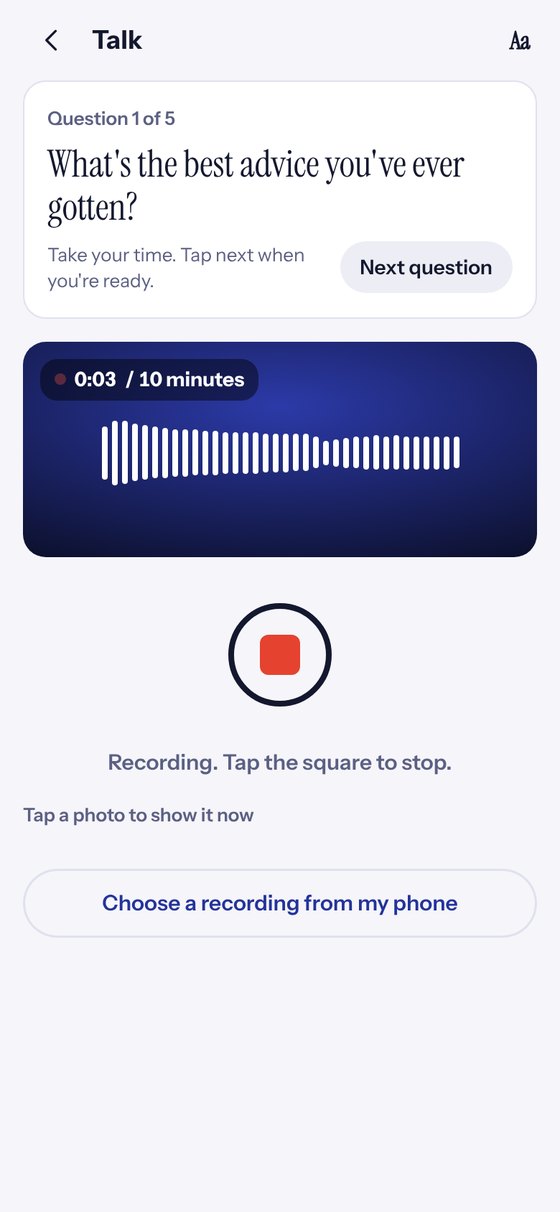
Everyone has stories worth keeping. Most of them never get told.
The apps that exist for this sell a gift: an adult child pays for a year of weekly emails to a parent, and the payoff is a printed book. I compared nine of them, from Storyworth and Remento to StoryCorps and Day One, on formats, prompts, sharing and price.
combine guided prompts, a lifelong timeline and a way to discover strangers' stories
a year for the paid leaders, sold as a gift for an older parent
storyteller per purchase, and the clock stops when the year ends
Reviews were high, so the complaints were about the model, not the quality: stories stop when the year ends, each extra storyteller costs extra, and AI rewriting can lose the person's real voice. And no life-story app had a feed, so there was no reason to come back after telling one story.
The goal: make telling your life story as easy as talking, and give people a reason to come back after the first one.
Don't fight for the gift book. Take the open lane.
Storyworth has sold the "gift for Dad" book since 2013 and has more than 63,000 Trustpilot reviews. Competing for that buyer would mean outspending them. The research pointed somewhere else: nobody pairs guided prompts and a lifelong timeline with friends and public discovery.
A one-year gift book
- Bought by an adult child, for one parent
- One question a week, for a year
- Private to the family
- The printed book is the finish line
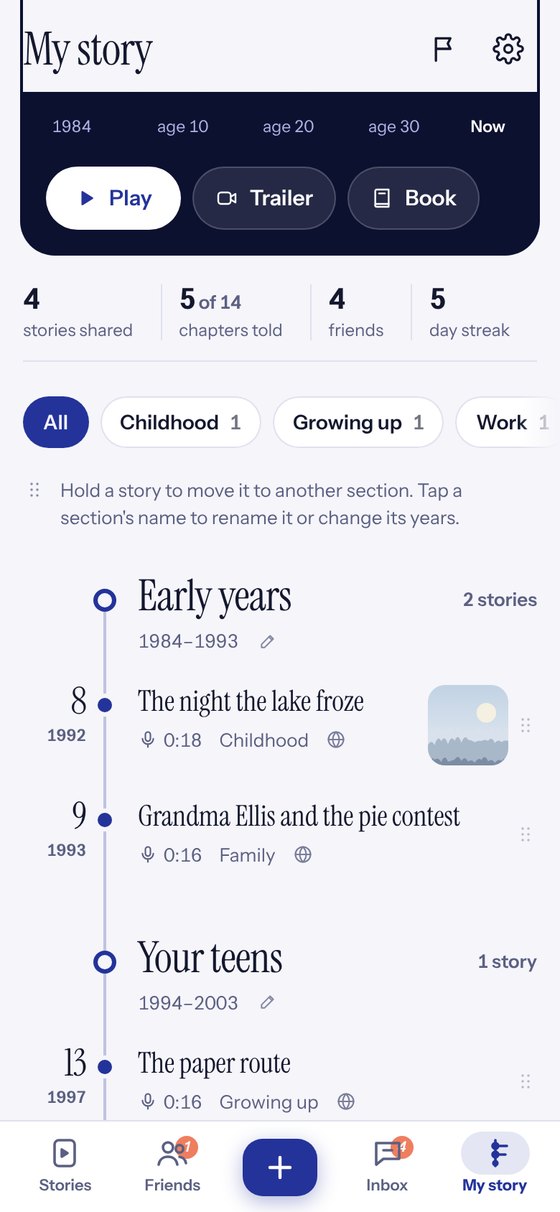
A social app for life stories
- Free, for anyone 18+, for life
- A prompt a day, answered by talking
- Each story private, friends, family or public
- A feed that turns listeners into tellers
The working name, LifeStory, was taken many times over, as were Retold, MyStory and a dozen close variations. I searched app stores and the web for names that were still open, and picked the plainest one on the shortlist because it says exactly what the app is.
Remove the blank page, then reward the people who listen.
Talk is the main button
Decision: I started video-first, then made voice the default. Captions write themselves, and photos tapped in while talking appear at that moment on playback. Video is one tap away. Why: talking is how every leader removes the blank page, the original voice answers the top complaint about AI rewrites, and captions let a voice story work in a feed on mute.
One small question at a time
Decision: 172 prompts across 14 life chapters, each with follow-ups, filled in with the person's own details ("What was {hometown} like the year you turned 10?"). Hard topics only for people who choose them. Why: "tell your life story" is paralyzing; "who was the teacher you still think about?" is not.
A feed that rewards connection, not just watching
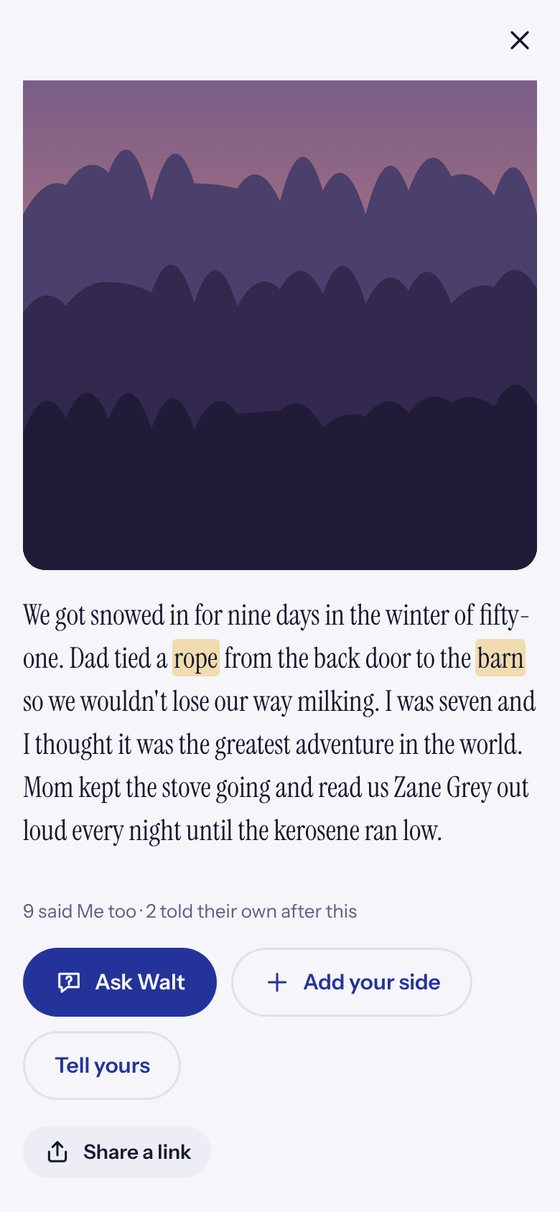
Decision: For You ranks on finishing a story, Me too, saves and questions, and weighs most when someone hears an answer and then tells their own. New tellers get a lift, and every fifth slot goes to a story with few views. Why: TikTok's signals reward watching. A story feed should reward the thing that keeps it alive: listeners becoming tellers.
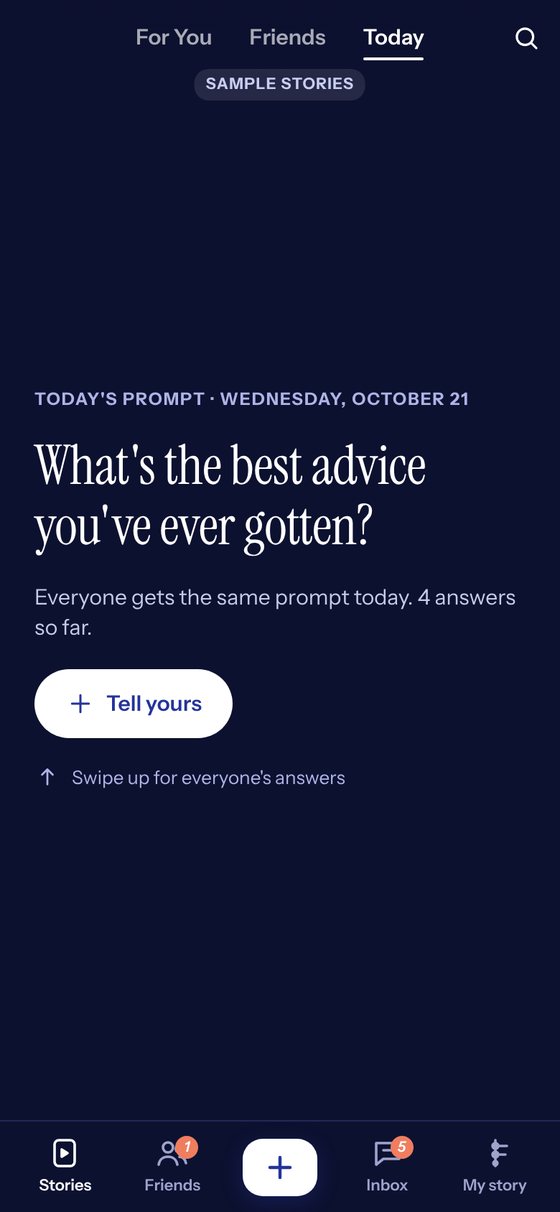
One prompt everyone answers today
Decision: a shared daily prompt with its own feed, Today. Why: it gives a first story a reason to exist, and an audience the same day.
No comments
Decision: people respond with Me too, a heart, a save or a private question to the teller. Why: life stories get personal. A private question invites the next story; a public comment thread invites a pile-on.
Choose who hears each story
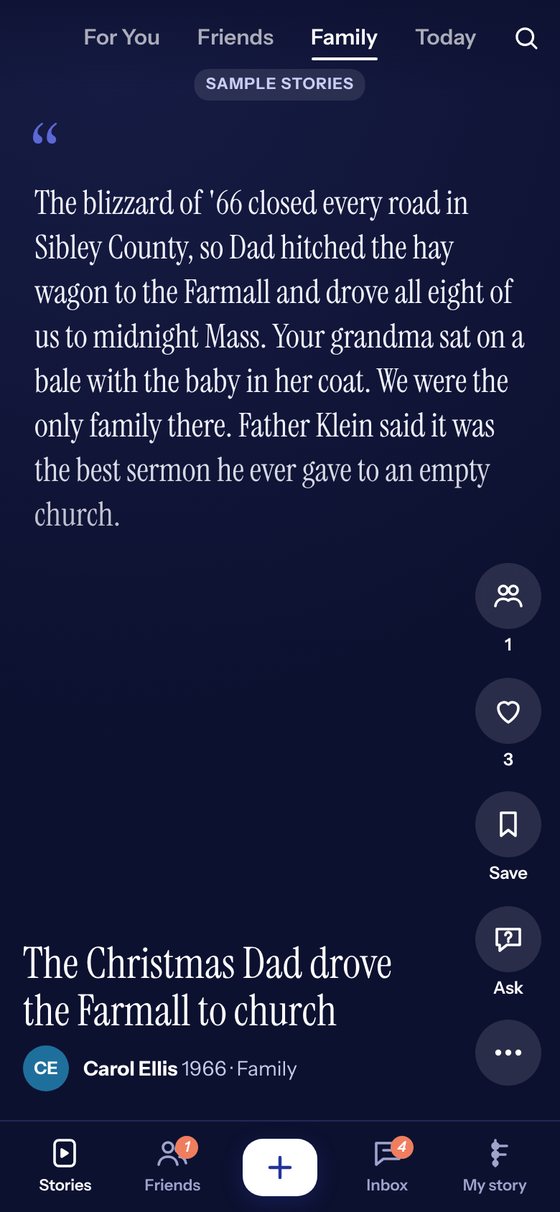
Decision: every story is Only me, Friends (the default), a Family circle, or Everyone. Only Everyone stories reach strangers. Why: people tell more when they decide, story by story, who's listening.
Keep someone else's stories
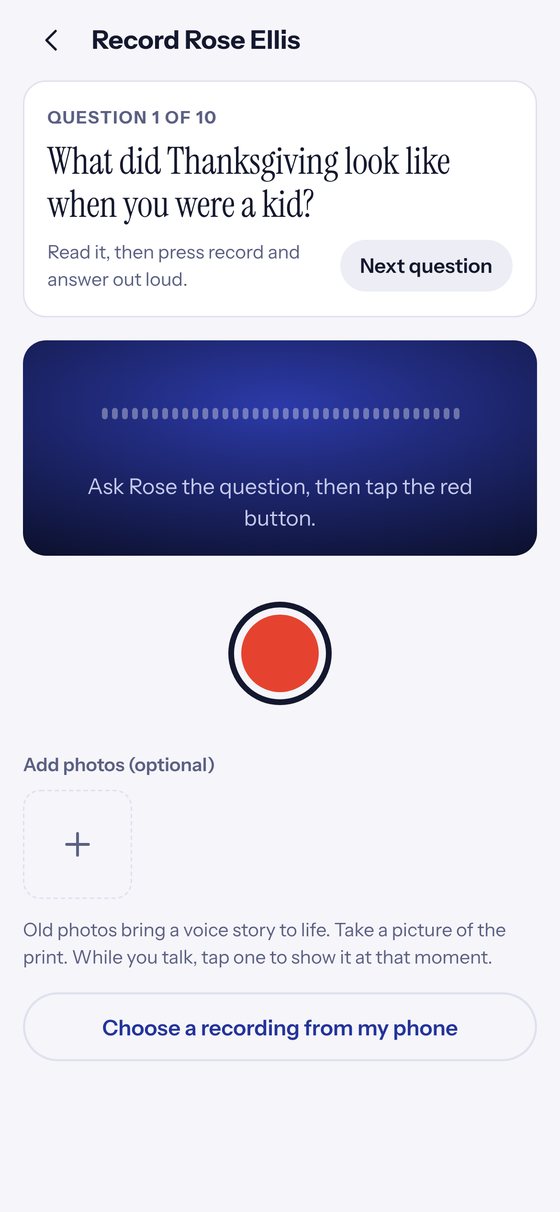
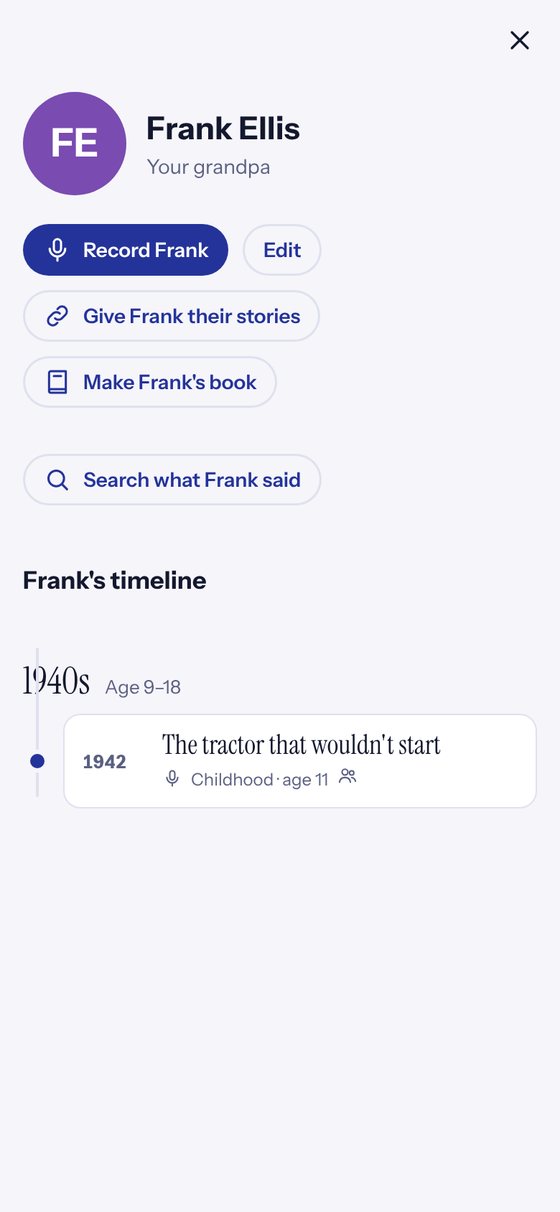
Decision: record a grandparent in interview mode, with questions on screen, on a timeline kept for them. A claim link hands it over if they ever join. Why: the stories people most want to save belong to the people least likely to download an app.
Questions about what was actually said
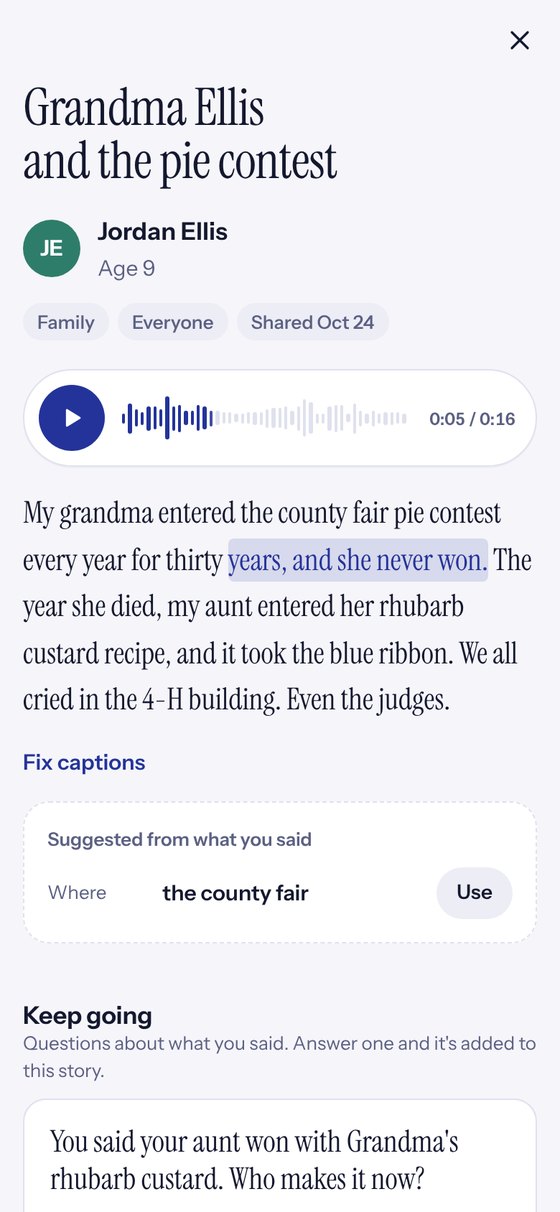
Decision: once captions are in, the app reads the story and suggests a title, chapter and year, plus follow-ups like "You said your aunt won with Grandma's rhubarb custard. Who makes it now?" Why: a specific question gets a second story; a generic one doesn't. It costs about $0.0003 a story.
Adults only, for now
Decision: 18+ at sign-up; only the birth year is kept. Why: California's SB 976 and New York's SAFE for Kids Act restrict ranked feeds for minors. Adults-only keeps a nationwide launch simple and legal.
Safety before reach
Decision: every shared story is checked for self-harm, threats and hate. A match goes to the moderators and stays out of For You until reviewed; a teller who may be at risk gets a support note with 988. Why: once strangers hear each other's hardest stories, the checks can't wait for a report.
Tell it under a pen name
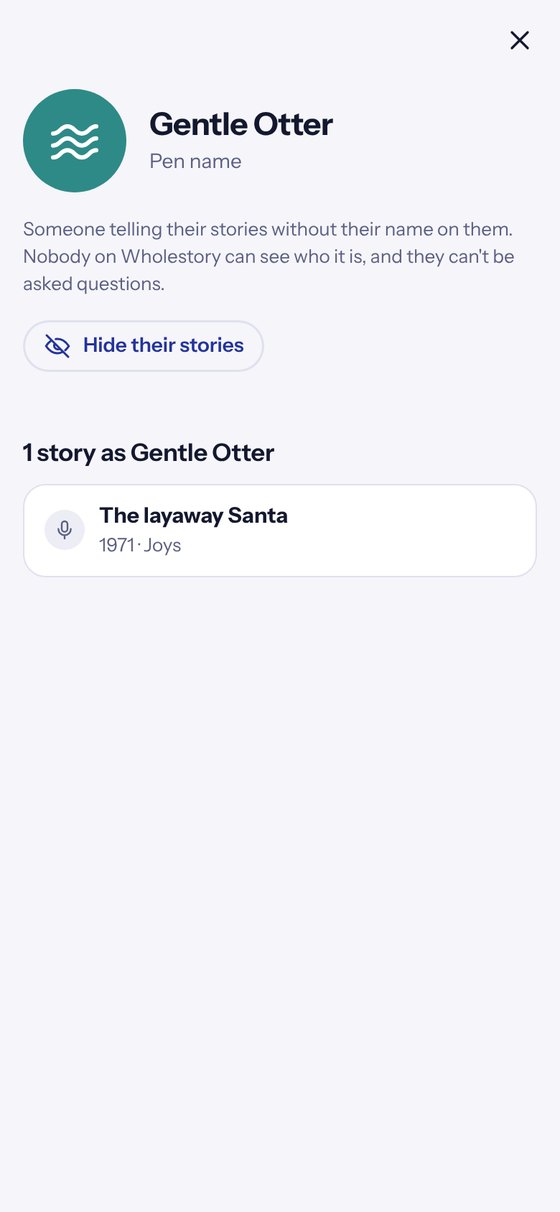
Decision: anonymous stories go out under a made-up name like "Quiet Heron", picked from friendly words, never typed. Nobody can trace it back; moderators can. Why: some of the most important stories (sobriety, a secret kept for years) only get told without a name on them.
A share loop built in
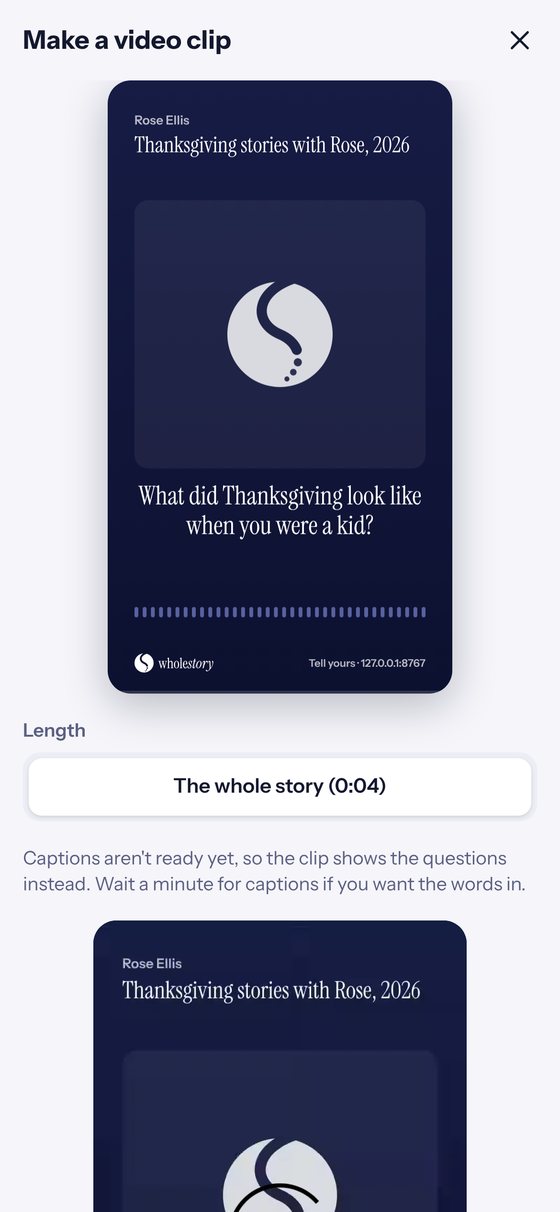
Decision: any voice story becomes a 9:16 captioned clip on the phone, and public stories get a page with a link preview and a player that works without an account. Why: every shared story is an ad that a real person chose to post.
A working app, tested end to end.
A Supabase database with row-level privacy rules, checked by 67 groups of automated tests; captions from Deepgram; story reading through the Claude API. The app was clicked through on phone-sized screens in a 151-step sample tour and a 48-step run against a real local server. It installs to a phone's home screen and has a sample mode: 57 made-up stories, each recorded in its teller's own voice with Kokoro, an open-source neural voice model, three of them whole lives from childhood to now.
Twelve emails in Klaviyo, triggered by what people do.
The app sends events to Klaviyo (signed up, opted in, published a story with its number, added a friend, made a book) and Klaviyo flows send the emails. The core is a welcome series that stops the moment someone tells a story:
| Flow | Trigger | Why it's built this way |
|---|---|---|
| Welcome series | Opted In | Not Signed Up: the app subscribes people before that event, so a Signed Up trigger could fire before consent lands and skip email one. |
| First story | Published Story, number 1 | Celebrates the activation moment and points to the next prompt. |
| Daily prompt | Daily Prompt event | The app decides who gets it (opted in, hasn't answered today). Smart Sending is off, or Klaviyo would skip days. |
| Weekly roundup | Weekly Roundup event | New stories from your people, only when there are some. Anonymous stories never appear. |
Plus two lead-magnet sequences for people who aren't users yet: Thanksgiving table cards (cards, interviewing tips, a Thanksgiving-morning reminder) and a Christmas gift card (the card, then a nudge on Dec 27 to use it). Each Klaviyo profile carries the ad that brought the person in and a founding-teller flag for segmenting. Klaviyo gets counts, prompts and the titles of friends' stories for the roundup, never recordings or transcripts. The list and all twelve emails are built; each flow switches on once its trigger event arrives from the live app.
A whole life, still being written.
The mark tells the same story the app does, in the order it happens. It plays on the app’s welcome screen, and below. Press Replay to watch it again.
- 1
The dots: one memory at a time
Three dots appear one by one at the bottom of the circle, the way a life story gets told on Wholestory: one prompt answered, one recording, then another. In the app, the same dots mark each year on a person’s timeline.
- 2
The line: an easier way forward
Once the dots are down, a line rises out of them and smooths into one steady curve. Each memory you record makes the path behind you clearer and the way forward easier to see.
- 3
The S: two halves, in balance
The curve runs through the center and divides the circle into two matching halves, like yin and yang: the stories you’ve told and the ones still to come, the hard chapters and the joyful ones. And it makes an S, for story.
The path and dots are real cutouts, so the mark works on any background. Stories are set in Instrument Serif so they read like a page; the interface is Instrument Sans.
Seed the feed first. Then a holiday with a built-in reason to record.
A new person who opens a story app to an empty feed leaves. One who hears five real voices in the first minute tells a story of their own. So the launch runs in two phases, and paid ads wait for a rule: the Today feed has to get 10 or more answers a day without anyone being nudged.
50 founding tellers
- Goal: about 500 public stories across all 14 chapters before ads.
- Who: storytellers over 60, their kids and grandkids, local characters, genealogy hobbyists and podcasters. At least a third over 60.
- Ask: one story, not a commitment. A personal invite link, a day-3 nudge with that day's prompt, and a Founding Teller badge, capped at the first 100.
- Calendar: 14 daily prompts, easy and joyful first. Hard times stays out on purpose.
Thanksgiving
- One promise: ten questions for the oldest person at the table.
- Path: ad → a landing page that trades free printable table cards for an email, with no account → record the first answer right away, before signing up. The account comes last, to keep the recording.
- Channels: Meta and TikTok ads, a two-email card sequence plus a Thanksgiving-morning reminder, then retargeting people who signed up and recorded nothing: "Did you get their stories?"
- Optimize for sign-ups first, then first stories once there are about 50 a week. Budget moves to the lowest cost per first story, not per sign-up.
Seven ads, one question each
Each ad asks a single question, and its link opens the app on that exact question, so a viewer can be recording in one tap with no account. “What’s the best advice you’ve ever gotten?” runs as the control, and the six others have to beat it on cost per first story, not on clicks. Three are timed to the holidays.
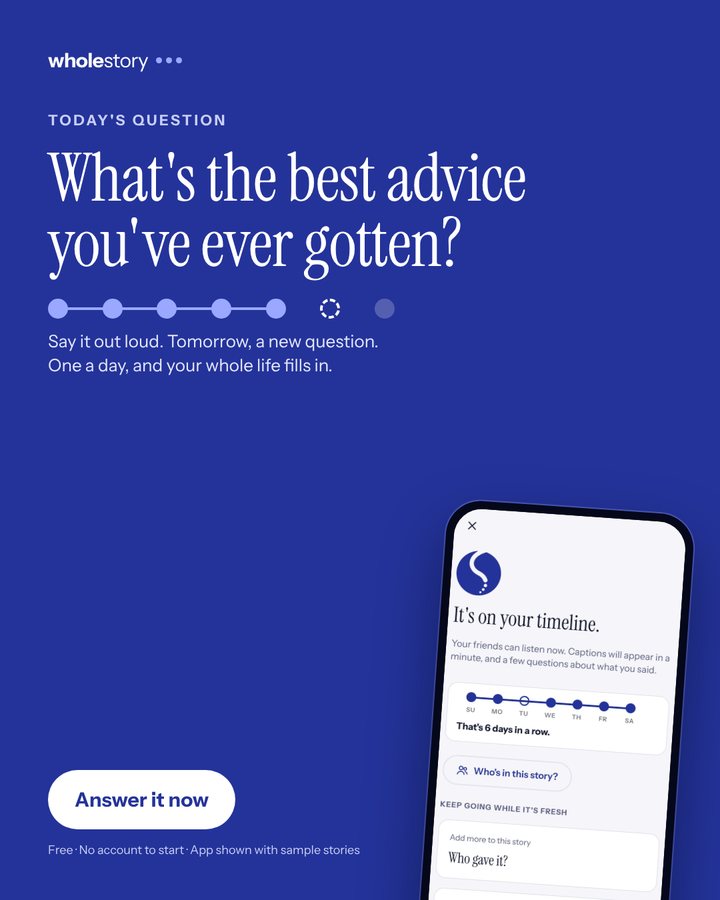
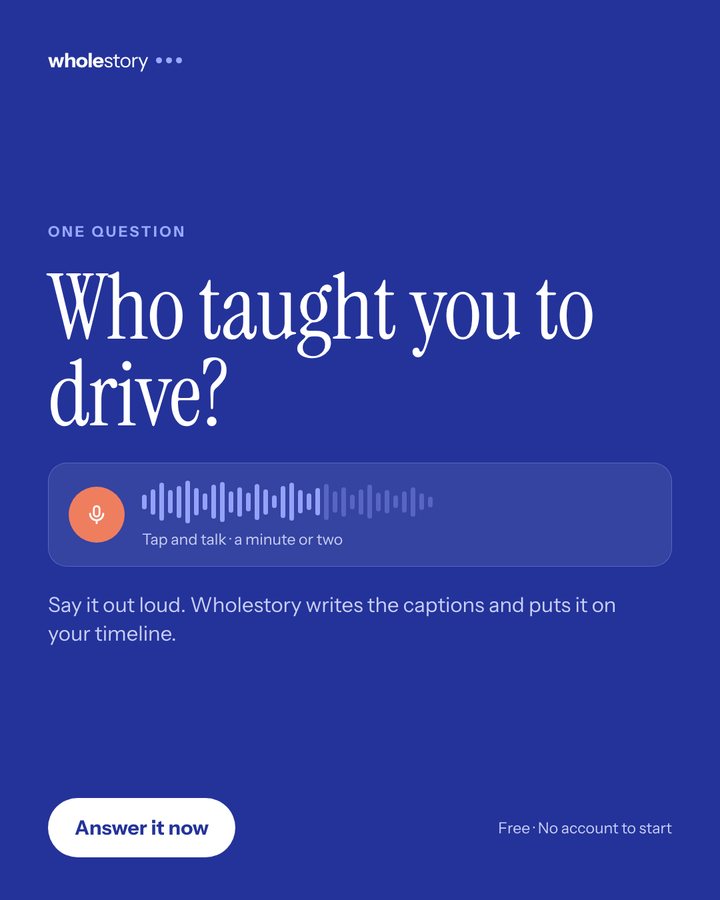
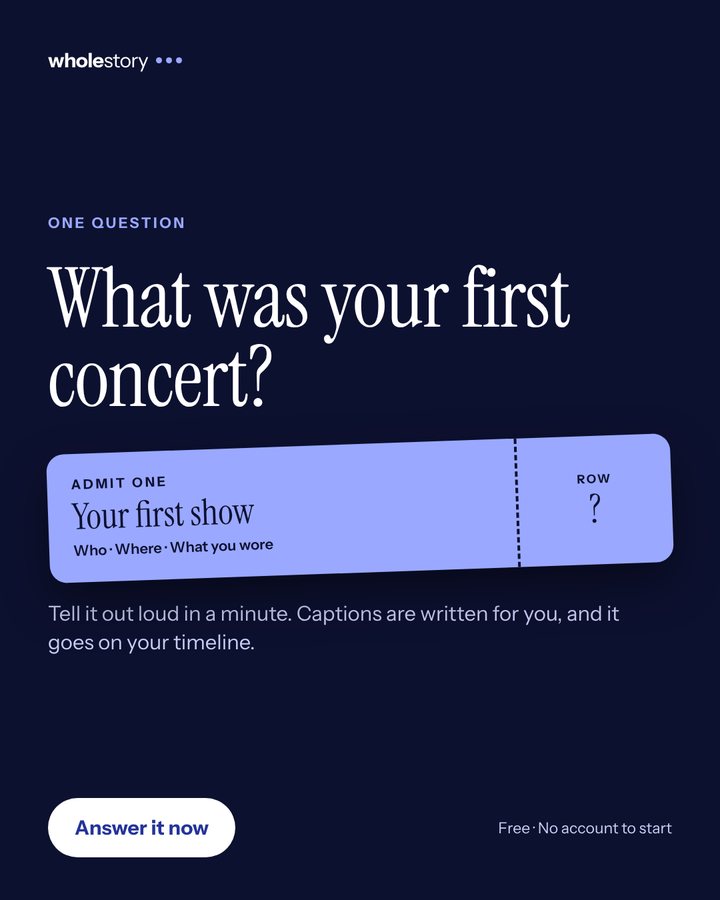
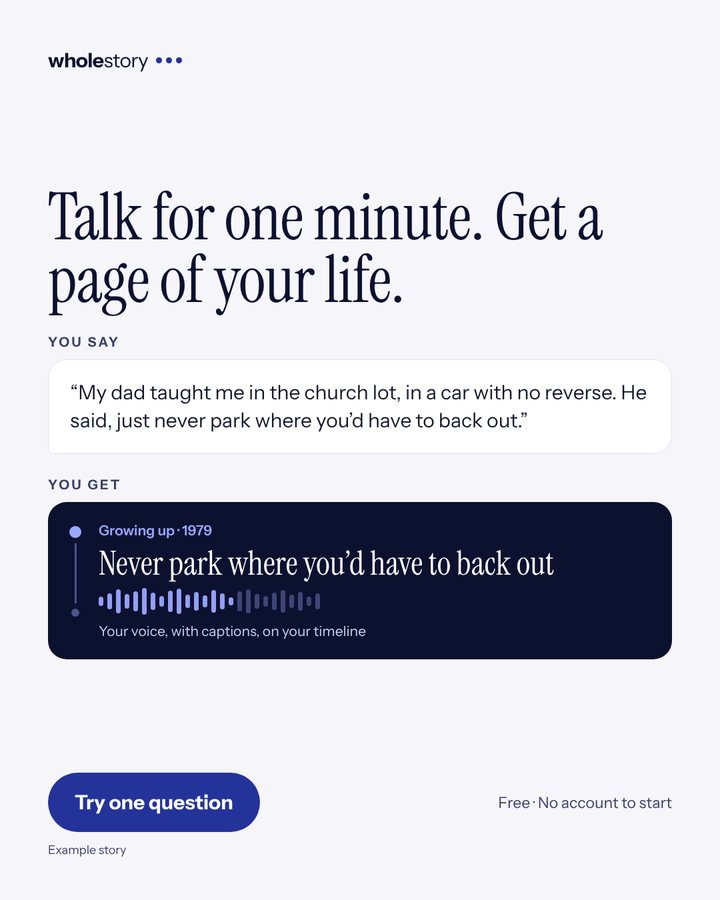
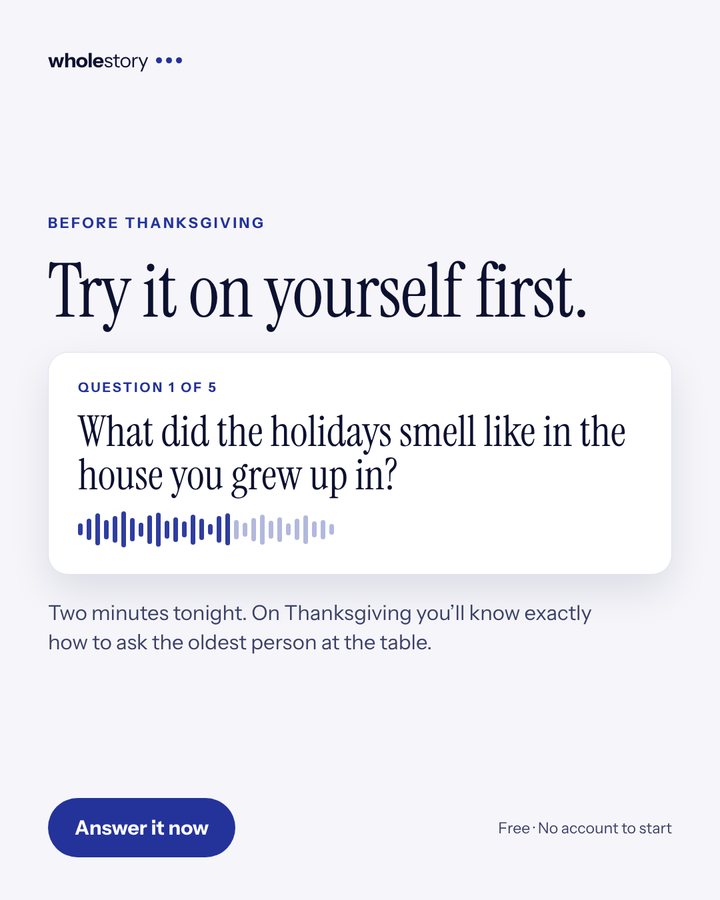
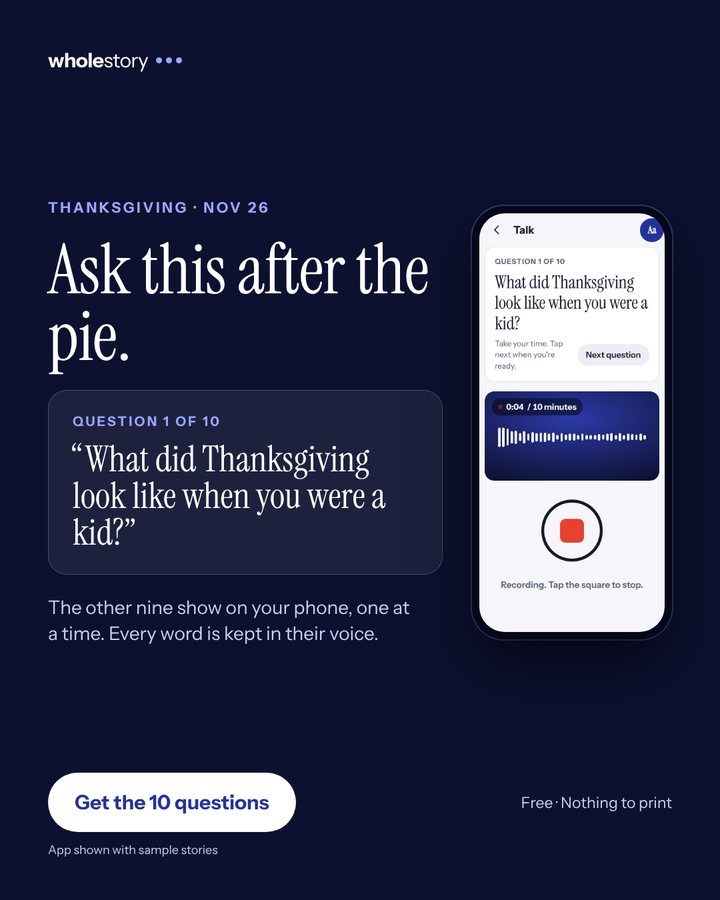
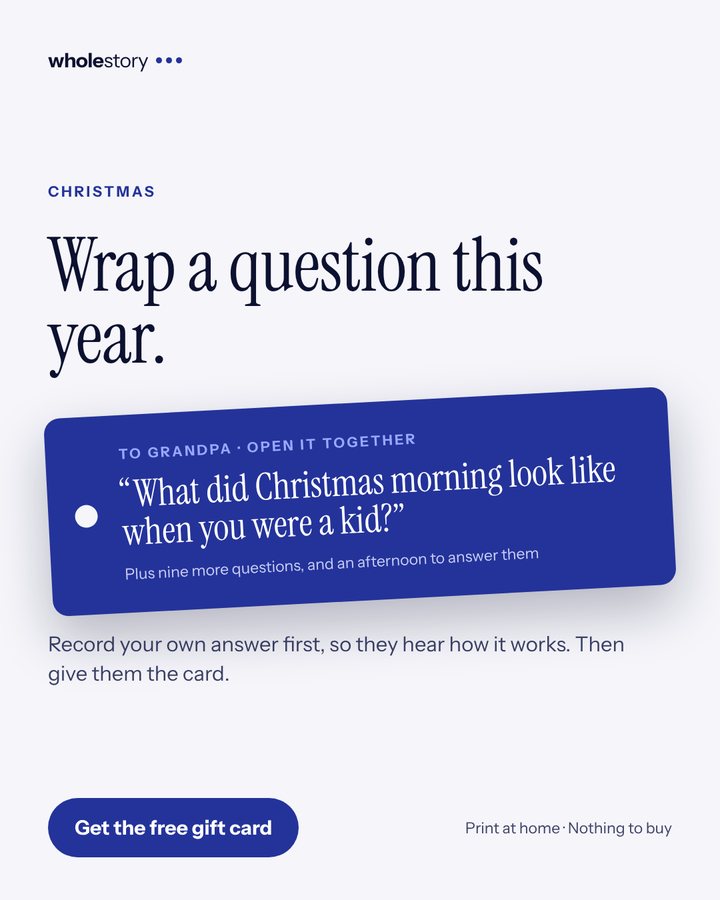
Ads that show app screens are labeled “App shown with sample stories,” and no ad presents a sample as a real person’s story. Every link carries tracking tags. The first ad that brought someone in is saved with their account and sent to Klaviyo, and Meta and TikTok get sign-ups and first stories from both the browser pixel and the server, counted once. An admin funnel shows sign-up to second story by source and campaign. Captions and story reading cost about 1.6 cents for a 3-minute story.
Results
Ad tests
| Ad | Creative | CTR | Cost per first story | Outcome |
|---|